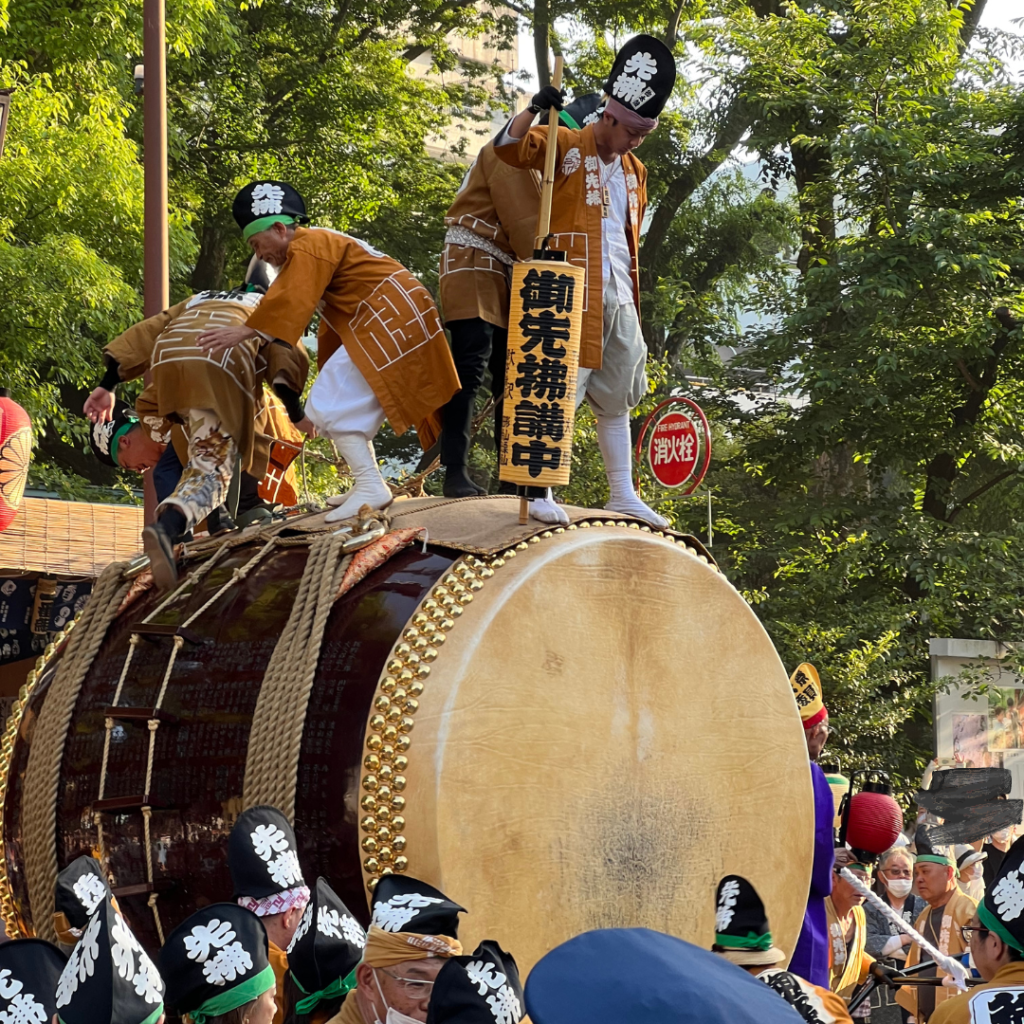
In Japan, as the cherry blossom season comes to an end in late April, announcements about this year’s summer festivals start appearing everywhere. Japanese festivals are held throughout the year, but many occur during the summer season from May to August. Festivals held during this period are collectively referred to as “summer festivals,” “Natsu Matsuri (夏祭り)” in Japanese. As this time of year approaches, many people begin to think about which festivals they might want to attend this year.
(1) Planning for Summer Festivals
Japanese summer festivals vary greatly in size and type, depending on the organizer and the format of the event, and also feature distinct regional characteristics. Participating in a historic and large-scale festival requires considerable preparation as many people flock to the towns and stations. However, the vibrant music of the festival bands (“Ohayashi (お囃子)” in Japanese) and the chants of the carriers (“Katsugite (担ぎ手)” in Japanese) stir the soul, inspiring attendees to think, “I’ll come back again next year.” If you happen to be in Japan during the summer, I highly recommend experiencing a summer festival.
(2) Types of Festivals in Japan
◯ Festivals Held at Temples and Shrines
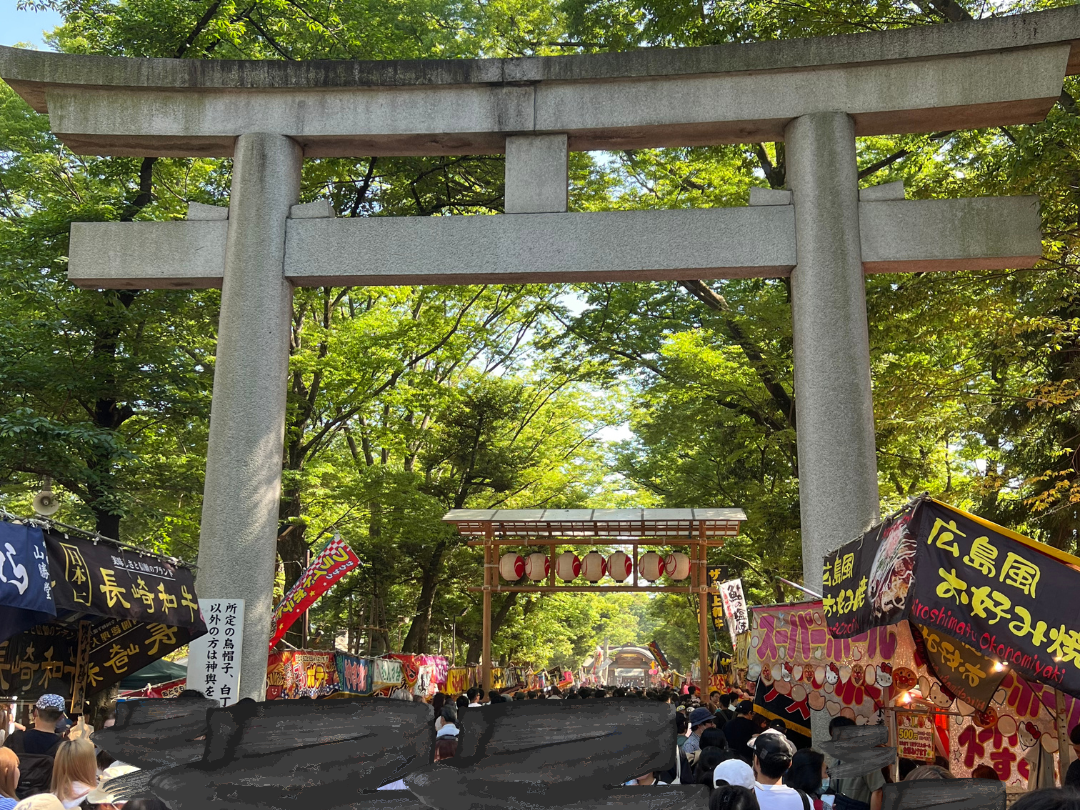
When Japanese people think of “summer festivals,” many imagine the ones held at temples and shrines. As night falls, lanterns are lit, making it cooler and attracting the most attendees during this time.
The primary purpose of these festivals is “religious ceremonies.” For example, Kyoto’s famous Gion Festival is a ritual of Yasaka Shrine. Internally, these ceremonies involve rituals dedicated to the deities, which might not always be visible to the public depending on the traditions. Externally, stalls line the approaches to the temples and shrines, allowing participants to enjoy themselves throughout the day. Being religious events, they are often held even in rainy weather.
The scale of the festival generally corresponds to the size of the temple or shrine. The three major festivals in Japan are Kyoto’s Gion Festival, Osaka’s Tenjin Festival, and Tokyo’s Kanda Festival. Larger festivals may block major roads for several days.
However, smaller scale does not mean lesser quality. Each festival has its own unique charm and character.
Festival dates may be fixed or change annually. It is advisable to check a festival calendar and carefully select which ones to attend.
– Festival Calendar: https://o-matsuri.jp/
◯ Fireworks Festivals
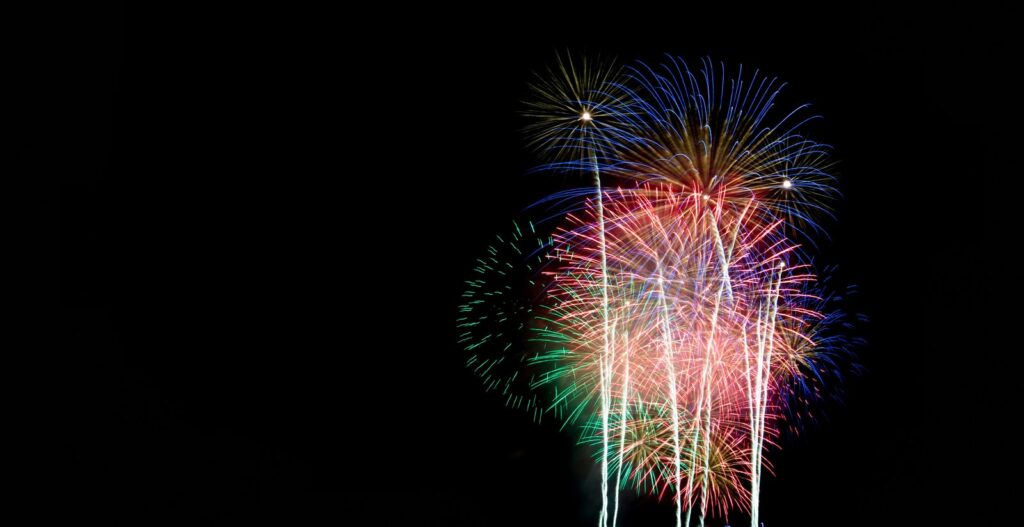
Many fireworks festivals in Japan are organized by national, regional, or local governments. These events typically last about an hour during which the fireworks are launched. While there are stalls at the fireworks venues, their sales tend to drop significantly once the fireworks show starts, hence there are fewer stalls compared to festivals organized by temples and shrines. It is advisable to bring your own food from convenience stores or supermarkets beforehand.
In contrast to overseas fireworks festivals, where a large number of fireworks are launched in a quick, intense succession (“boom boom boom!”), Japanese fireworks festivals may have moments of rapid firing but mostly feature fireworks launched at a frequency of about one to around five shells at a time. This allows spectators to fully appreciate each firework’s size, beauty, and design in the darkness. When a large, simple firework goes off, applause naturally erupts from the audience. If you moved, try joining in by shouting “Tamaya!” — a traditional exclamation at fireworks displays.
Note that fireworks events can be canceled due to rain. Japan’s summer evenings often experience sudden downpours (guerrilla rainstorms), so the possibility of cancellation is not negligible.
– National Fireworks Calendar: https://www.club-t.com/sp/special/japan/hanabi/list/
◯ Tanabata Festival
July 7th is Tanabata, and around this date, Tanabata festivals are held across Japan. The “Three Great Tanabata Festivals” of Japan are typically considered to be the Sendai Tanabata Festival, the Shonan Hiratsuka Tanabata Festival, and the Ichinomiya Tanabata Festival, although there are various opinions on this list.
These festivals are often organized by shopping districts and local municipalities and usually take place along the streets of these shopping districts. During Tanabata, the areas are festively decorated with colorful streamers and bamboo branches, where people hang their written wishes on small pieces of paper. It’s a vibrant celebration that combines both traditional and community elements, making it a unique and culturally enriching experience.
◯ Bon Dance Festival
Bon Dance festivals are commonly organized by local municipalities and are held during the Bon season in Japan, which occurs around July and August. The primary purpose of these events is to honor ancestors.
These festivals typically take place in small parks or similar public spaces. A wooden stage called a “yagura” is set up in the center of the area, and participants dance around or on this stage in a dance known as “Bon Odori.” The music and dance styles vary significantly from one region to another, reflecting the local culture and traditions. Often, practice sessions are held before the festival to teach the dances.
There are countless variations of Bon Odori, so it’s highly recommended to check out some examples on YouTube. Among the most famous Bon dances nationally are the Soran Bushi, Awa Odori, and Eisa. These dances are so renowned that national competitions are held in various locations across Japan, not just during the summer. One memorable experience I have is attending an Awa Odori competition in Hokkaido, where the energy and passion of the dancers were incredibly moving.
(3) My Summer Festival Playlist
◯ Kurayami Festival (May)
The Kurayami Festival is held at Ookunitama Shrine and “kurayami” means darkness, reflecting the festival’s main events, which take place from 18:00 into the night. Multiple major roads are blocked off for the procession of floats and large drums throughout the town. On the final day, May 5th, multiple large drums owned by various municipalities gather at the shrine’s approach and start drumming simultaneously at 18:00. The sound is so powerful it feels like it could stop your heart. I’ve been attending since I was young and plan to go again this year.
◯ Gion Festival (July)
I plan to visit Kyoto and would like to stop by the Gion Festival (祇園祭), held at Yasaka Shrine. It spans the entire month of July with the main events occurring from July 14 to 17. Major roads in Kyoto (especially in front of Yasaka Shrine) are closed for the festival. From July 1 to 18, floats are constructed in various parts of Kyoto, and on July 17, they parade through the city in what is known as the Yama-Hoko procession.
◯ Showa Kinen Park Fireworks Festival (July)
This fireworks festival is held in a national park. As it coincides with the Sumida River Fireworks on the same day, participants in the Kanto area often choose between the two. This year, I plan to go to Showa Kinen Park because it’s less crowded (though “less” is relative; what normally takes 15 minutes to reach can take about an hour to walk due to the crowd).
◯ Local Community Festival (August)
I plan to attend if there’s one near my home. I’m looking forward to grabbing some dinner there.
Conclusion
If you visit Japan between May and August, I highly recommend checking out the festivals. These festivals welcome people of all religions and races, so it’s a great opportunity to fully experience the Japanese summer. Please note that many festival stalls (yatai) do not accept electronic payments, so be sure to carry cash. Additionally, as many people attend these festivals, accommodations and transportation can get very crowded, so it’s wise to make your reservations early.